Discover Who Were the Three Kings?
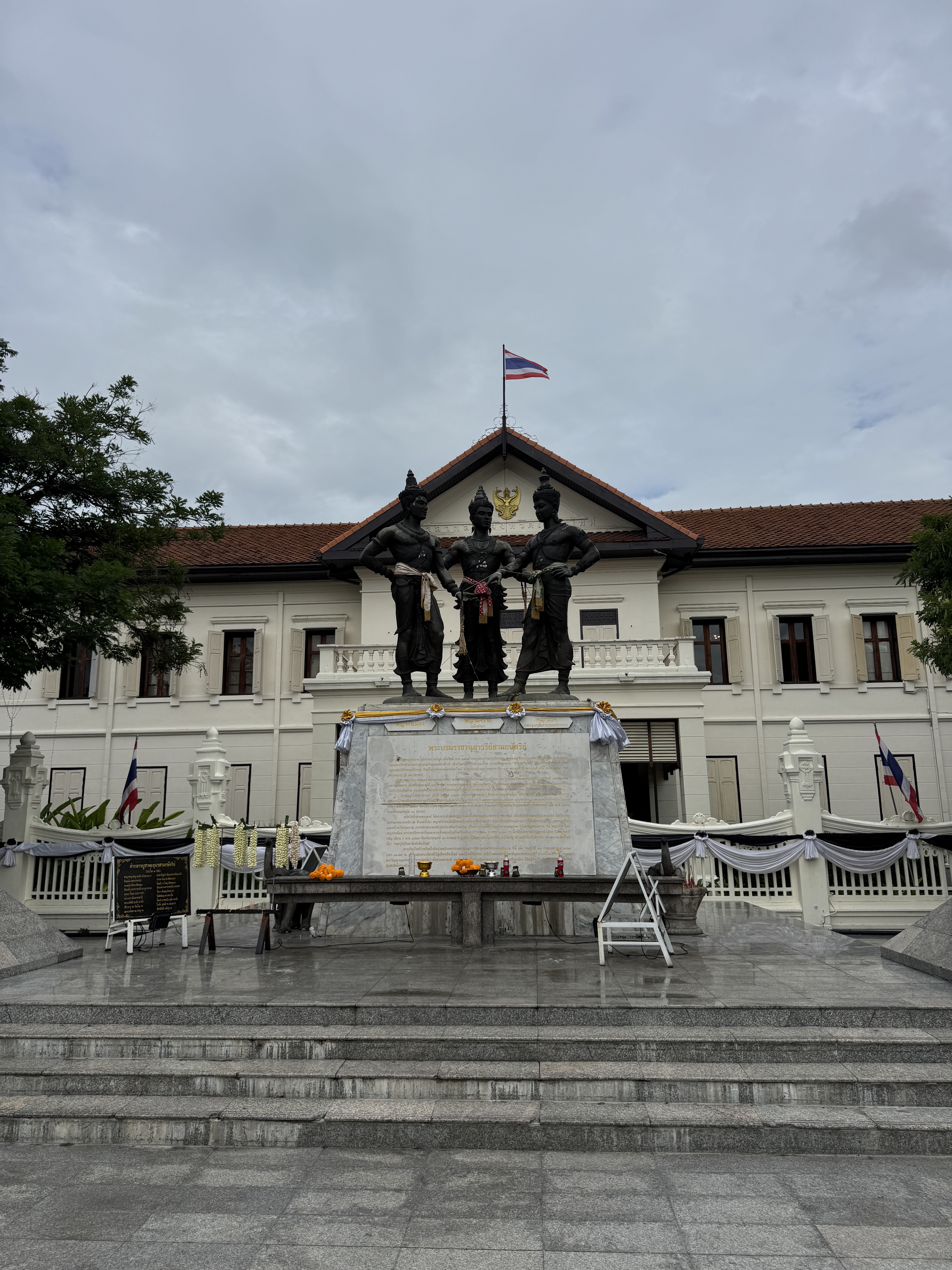
The central figure is Mangrai, associated with Chiang Mai’s founding in 1296; the other figures represent Ramkhamhaeng of Sukhothai and Ngam Muang of Phayao. The monument depicts their remembered alliance, rather than a literal contemporary group portrait.
Visit tips
Read the names first, then compare the monument’s composition with the museum explanations nearby.
Distinctive highlights
The central figure is Mangrai, associated with Chiang Mai’s founding in 1296; the other figures represent Ramkhamhaeng of Sukhothai and Ngam Muang of Phayao. The monument depicts their remembered alliance, rather than a literal contemporary group portrait.
About Who Were the Three Kings?: management and heritage
This is a self-guided editorial itinerary around the Three Kings Monument, rather than a separately managed attraction. Individual museums, temples and markets along the route are managed by their own organizations; check each venue’s notices.
The route begins with the civic monument to Mangrai, Ramkhamhaeng and Ngam Muang. It connects the city’s founding memory with its later public spaces, museums and living religious traditions. The central figure is Mangrai, associated with Chiang Mai’s founding in 1296; the other figures represent Ramkhamhaeng of Sukhothai and Ngam Muang of Phayao. The monument depicts their remembered alliance, rather than a literal contemporary group portrait.
Basic visitor information
- Suggested meeting point (Three Kings Monument)
- QXRP+3WX, Prapokklao Road, Si Phum, Mueang Chiang Mai, Chiang Mai 50200, Thailand
- Visit type
- Self-guided travel planning
- Opening hours
- Follow access hours of each stop
- Tickets
- Any individual attraction fees are separate
Opening hours and admission planning
This is a suggested route rather than a ticketed attraction. Check the opening times and entry requirements of each stop individually before setting out.
For museum and temple visits, allow time for security or dress requirements; for markets and street events, check the day and time of operation. Do not assume that the outdoor square and the indoor facilities have matching hours.
History, architecture and observation points
Historical background
The central figure is Mangrai, associated with Chiang Mai’s founding in 1296; the other figures represent Ramkhamhaeng of Sukhothai and Ngam Muang of Phayao. The monument depicts their remembered alliance, rather than a literal contemporary group portrait.
Architecture and distinctive features
This itinerary links the broad civic square, the Old City street grid and nearby architecture. The central figure is Mangrai, associated with Chiang Mai’s founding in 1296; the other figures represent Ramkhamhaeng of Sukhothai and Ngam Muang of Phayao. The monument depicts their remembered alliance, rather than a literal contemporary group portrait.
What to observe on site
The central figure is Mangrai, associated with Chiang Mai’s founding in 1296; the other figures represent Ramkhamhaeng of Sukhothai and Ngam Muang of Phayao. The monument depicts their remembered alliance, rather than a literal contemporary group portrait.
What makes this stop worth visiting
- Understand Mangrai, Ramkhamhaeng and Ngam Muang before looking at the statues.
- The central figure is Mangrai, associated with Chiang Mai’s founding in 1296; the other figures represent Ramkhamhaeng of Sukhothai and Ngam Muang of Phayao. The monument depicts their remembered alliance, rather than a literal contemporary group portrait.
- A straight-on composition makes the three figures legible.
Suggested walking route
- Start at the Three Kings Monument and orient yourself within the Old City.
- Observe the three figures from the front, then visit the City Arts & Cultural Centre for context.
- Finish with a rest or food stop, allowing extra time for weather and local access conditions.
Before you visit
Read the names first, then compare the monument’s composition with the museum explanations nearby.
In hot weather carry drinking water and sun protection. During the rainy season allow flexibility. Use marked crossings and respect temple customs, museum signs and local ceremonies.
Photography viewpoints
A straight-on composition makes the three figures legible.
Food and accommodation
Central Chiang Mai has cafes, food stalls and accommodation in and around the Old City. Compare locations against your chosen route and transport needs; availability and prices depend on the date. For a short visit, staying near the moat or a convenient Old City entrance can reduce extra transfers.
Visitor feedback and review checks
Read recent visitor comments for Who Were the Three Kings? directly on Google Maps to compare current access, crowding and facilities. Ratings and review counts can change; this guide does not reproduce unverified visitor quotations or treat reviews as official notices.
View current visitor reviews ↗Getting there and navigation
Location / meeting point: QXRP+3WX, Prapokklao Road, Si Phum, Mueang Chiang Mai, Chiang Mai 50200, Thailand
Navigate first to the Three Kings Monument, then follow the suggested sequence on foot or with local transport.
For driving, check local parking options and traffic restrictions. For public transport, choose a safe drop-off and complete the final Old City section on foot.
Open Who Were the Three Kings? on Google Maps ↗Frequently asked questions
How do I find Who Were the Three Kings??
Begin at Three Kings Monument on Phra Pokklao Road and follow the route suggested in this guide.
Are opening hours and admission guaranteed?
No. Hours, tickets, religious ceremonies and events may change. Check with the individual venue or on-site notices before visiting.
Can this be combined with the Three Kings Monument?
Yes. Use the suggested route below and adapt it to weather, mobility and the time available.
Continue exploring nearby
- Chiang Mai City Arts & Cultural Centre
A city-history museum in the former provincial hall behind the monument square.
- Lanna Folklife Museum
A heritage museum opposite the monument, in a former court building.
- Chiang Mai Historical Centre
A museum stop for the layers of Chiang Mai’s settlement and urban history.
- Wat Chedi Luang
An Old City temple renowned for its monumental brick chedi.
Sources and updates
Background reading: Tourism Authority of Thailand, Chiang Mai Province tourism portal. For local opening and admission conditions, confirm with the attraction directly. Guide prepared November 2026.